
Table of Contents
- Why AI Is Not A Complete Replacement For Human Support
- The Businesses That Win Will Use AI With Skilled People
- How AI Makes Virtual Assistants More Valuable
- Why Business Owners Should Not Rely On AI Alone
- The New Standard For A Modern Virtual Assistant Service
- Where AI Can Support IT And Technical Tasks
- What This Means For Australian Businesses
- How To Choose A VA Who Can Work With AI
- Conclusion
AI has quickly become part of daily business life. It can write drafts, organise notes, summarise meetings, sort data and help teams work faster. Because of this, many business owners are asking the same question: Will AI replace virtual assistants?
The better question is not whether AI will replace people. The real question is whether your business is ready to work with people who know how to use AI well. AI is not the end of virtual assistant support. It is changing what good support looks like.
Why AI Is Not A Complete Replacement For Human Support
AI is useful, but it does not fully understand people, pressure, priorities or business relationships. It can follow instructions, but it cannot always judge what matters most in a real business situation.
A virtual assistant can understand tone, timing and context. They can decide when an email needs a careful reply, when a task is urgent and when something should be checked before moving forward. These small decisions are often what keep a business running smoothly.
AI can help with the task. A skilled person still needs to guide the result.
The Businesses That Win Will Use AI With Skilled People
Businesses that use AI with the right people will have a clear advantage. They can move faster, reduce manual work and get more done without adding pressure to their internal team.
This is why many business owners now choose to hire virtual assistants who are comfortable using modern tools. A VA who understands AI can prepare reports, manage admin, organise workflows and support communication more quickly than someone working with manual processes only.
The aim is not to replace people with software. The aim is to give good people better tools.
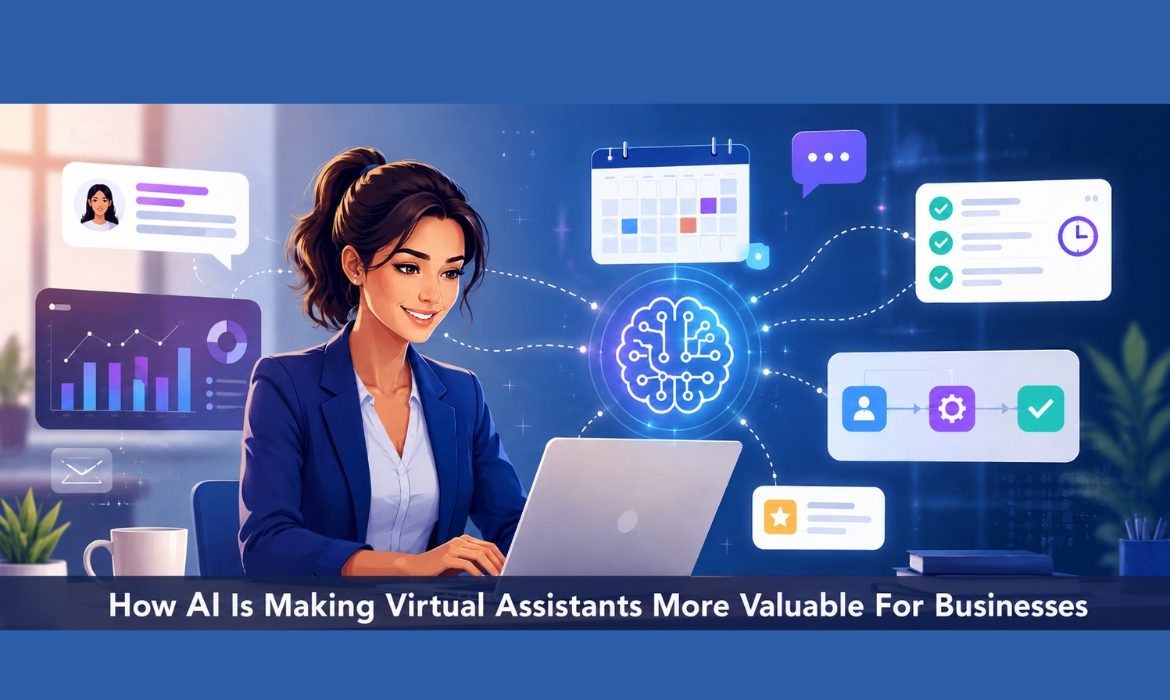
How AI Makes Virtual Assistants More Valuable
AI can make a virtual assistant more useful across many everyday tasks. For example, it can help draft email responses, summarise long documents, prepare meeting notes and organise action lists.
It can also support content planning, customer service preparation, CRM updates, basic research and data entry. These are tasks that usually take time when handled manually.
However, the real value comes from the VA reviewing, improving and applying the output properly. AI may create the first draft, but the VA ensures it is accurate, clear, and suitable for the business.
Why Business Owners Should Not Rely On AI Alone
AI is powerful, but it can still make mistakes. It may misunderstand instructions, miss important details or produce content that sounds correct but is not fully accurate.
For a business, this can create problems. The wrong response to a client, an incorrect report, or a poorly written message can erode trust. That is why human review is important.
A virtual assistant serves as the quality-control layer. They can check the information, adjust the tone, remove errors, and ensure the final work aligns with the business goal.
The New Standard For A Modern Virtual Assistant Service
A modern virtual assistant service should offer more than basic task support. It should help businesses work smarter by combining reliable people, clear processes and the right digital tools.
Today’s VAs may support admin, finance, sales, marketing, customer communication, reporting and internal coordination. When they use AI responsibly, they can complete some tasks faster while still keeping the human touch.
This is especially valuable for Australian businesses that want flexible support without building a large in-house team. The right VA can save time, reduce workload and help daily operations feel more organised.
Where AI Can Support IT And Technical Tasks
AI is also changing how businesses manage technical support. It can help create helpdesk notes, summarise support tickets, prepare software guides and organise internal documentation.
For businesses using virtual IT support services, AI can support faster information handling and clearer communication between teams. It can help staff understand issues, track requests and improve documentation.
Still, IT support needs technical knowledge, security awareness and human judgement. AI may support the process, but skilled people are needed to review, solve and manage the work properly.
What This Means For Australian Businesses
Many Australian businesses are under pressure to do more with less. Costs are rising, teams are busy and business owners often spend too much time on admin instead of growth.
AI-supported virtual assistants can help reduce this pressure. They can handle repeat tasks, organise communication, support reporting and give business owners more time to focus on clients, sales and strategy.
This does not mean every business needs to use every AI tool available. It means businesses should look for smarter ways to complete work while keeping quality, privacy and service in mind.
How To Choose A VA Who Can Work With AI
Choosing the right VA is now more important than ever. Business owners should look for someone who can use AI carefully, not someone who blindly relies on it.
A good VA should have strong communication skills, attention to detail and a clear understanding of business workflows. They should know how to review AI output, protect sensitive information and ask the right questions when instructions are unclear.
The best support comes from someone who can combine technology with common sense. That mix is what makes a VA truly valuable in the AI age.
Conclusion
AI will not replace skilled virtual assistants, but it will change what businesses expect from them. The real advantage belongs to businesses that combine human support with smart tools. When AI is used properly by trained people, everyday work becomes faster, clearer and easier to manage.
 Webential